


Less Guilt, More Love: Rethinking Responsible Pet Care

September is officially Responsible Pet Ownership Month. Summer has a way of loosening everyone's routines as the days run long, the leash walks get shorter, and somewhere around the tenth heat advisory, "responsible pet ownership" starts to feel like a phrase for other people, the kind who color-code their dog's meal schedule and never once forget to trim nails. This month is a good time to take that phrase back for the rest of us.

This article isn't about being a perfect pet owner. It's about a handful of habits that make life better for the animal sharing your home, and easier for you too. And the numbers make a surprisingly strong case for why these habits matter more than most of us assume.
Start with the basics, because they're basic for a reason
Vaccinations, heartworm prevention, flea and tick control. None of it is exciting. All of it is the difference between a long, healthy life and a very expensive emergency vet visit. If you can't remember the last time your dog saw a vet, September is as good a month as any to fix that.
Fall is also when a lot of wildlife starts moving around more as temperatures ease, which means this is prime season for ticks to hitch a ride on your dog and eventually onto your couch, your carpet, and quite possibly you. A quick check after every walk through tall grass takes thirty seconds. Treating a tick-borne illness takes considerably longer, and your dog will not thank you for the wait.
While you're at it, take a look at your dog's weight. Recent national survey data puts 37 percent of dog owners describing their dog as above ideal weight in 2025, up from 35 percent the year before [1]. That's not a small drift. Only about a quarter of dog owners can recall their vet actually giving them a body condition score, which means most of us are guessing rather than knowing [2]. Your vet can settle the question in about ten seconds, and it's a much easier conversation to have now than after a joint problem shows up later.
Dental health tends to get skipped in this conversation, and it shouldn't. Most dogs show some sign of dental disease by the time they're three years old, and it's not just a cosmetic issue. Untreated dental disease can lead to infection that spreads well beyond the mouth. Daily brushing sounds ambitious, but even a few times a week, paired with dental chews and a professional cleaning when your vet recommends one, makes a real difference.
Microchips and tags aren't optional extras
Every year, dogs slip out of gates, wiggle out of collars, or simply decide that the mail carrier's route looks more interesting than home. This isn't a rare event. Veterinary groups estimate that roughly one in three pets will go missing at some point in their lives [3], which means the odds are better than you'd think that this will eventually be your problem to solve.
Here's where the data gets genuinely persuasive. In shelter studies, microchipped dogs are reunited with their families around 52 percent of the time, compared to about 22 percent for dogs without a chip [4]. That's more than double the odds, for a procedure that takes seconds and costs less than a nice dinner out.
But the chip alone isn't the whole job. Among microchipped animals who never made it home, the single biggest reason was an incorrect or disconnected phone number sitting in the registry [4]. In other words, the technology worked. The paperwork didn't. Check that your information is current. People move. Phone numbers don't always come with them, and your dog's safety net shouldn't depend on a number you haven't used since a previous decade. A collar tag with your current number is still worth having too. It's the low-tech backup that works even when nobody's near a scanner.
Training is a conversation, not a chore
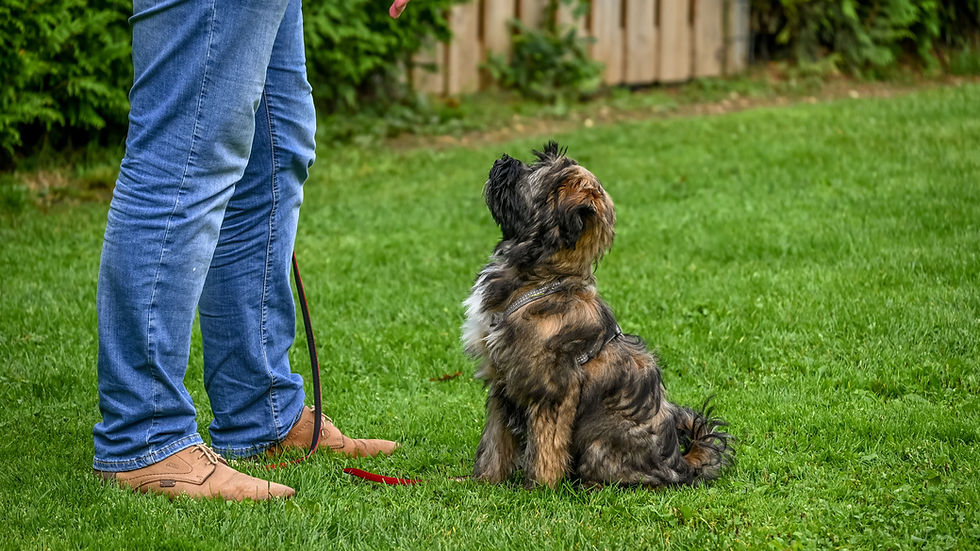
A well-mannered dog isn't born, and it isn't magic. It's the product of small, repeated conversations between you and your dog about what's expected. Sit before the door opens. Walk without towing your owner down the street like a water-skier. Come when called, even when the squirrel situation is dire.
This matters more than it might seem. In a major 2024 industry survey on shelter relinquishment, 24 percent of people who had given up a pet cited behavioral or training problems as the main reason [5]. That's not a niche issue. It's one of the top reasons that dogs lose their homes. And here's the hopeful part of that same study: 94 percent of owners who considered surrendering their pet chose to keep it once they got some support [5]. Training isn't a luxury for show dogs and competition handlers. It's often the thing standing between a rough patch and a rehomed dog.
None of this needs to be formal. Five consistent minutes a day, worked into your normal routine, adds up faster than most people expect. Practice a sit while dinner is on the stove. Practice a stay while you check the mail. A dog that understands the household rules is a dog that gets more freedom, more trust, and more good days out with you.
Enrichment matters more than you'd think
A dog that's bored isn't lazy. A dog that's bored is an engineer, quietly working out how to redecorate your shoes, excavate your backyard, or sing the song of their people to every falling leaf or car driving by. Boredom in a smart, active dog doesn't sit still. It goes looking for a project, and you may not love the project it picks.
Puzzle feeders, sniff walks, a new route around the block instead of the same one for the hundredth time. None of this needs to be elaborate or expensive. Scattering kibble in the grass and letting your dog hunt for it can occupy a restless mind for twenty minutes. A sniff walk, where you let your dog set the pace and investigate every mailbox post like it's a crime scene, does more for their mental state than a brisk walk around the block ever will.

Budget for the whole dog, not just the fun parts
This is the part nobody puts on a welcome mat, but it belongs in this conversation. National estimates put the average annual cost of owning a dog somewhere between roughly $1,200 and $2,800, and that's before anything unexpected happens [6][7]. Emergency vet visits, a sudden limp, an allergy that needs a special diet, these costs tend to arrive without warning and without much patience for your monthly budget. Being a responsible owner doesn't mean having unlimited money. It means being honest with yourself before an emergency arrives, not during one. A small pet savings fund, even a modest one, or a pet insurance policy, can be the difference between a hard financial month and a decision you'll regret.
Spaying and neutering is part of the basics, too
This one doesn't always make it onto the "responsible pet ownership" checklist, but it certainly belongs. According to Shelter Animals Count's 2025 national data, only about 25 percent of dogs entering shelters had already been spayed or neutered, a number that's actually dropped since before the pandemic [8]. That gap matters. A single unaltered female dog and her descendants can theoretically be responsible for tens of thousands of puppies over just a few years, and while that's a theoretical ceiling rather than a real-world guarantee, it explains a lot about how shelters end up full.
Spaying and neutering isn't only about preventing litters, either. It tends to reduce roaming, lowers the risk of certain cancers and infections, and can take the edge off some of the more frustrating behavioral habits that come with intact animals. If cost is the obstacle, low-cost clinics exist throughout the country. This is one of those rare cases where the responsible choice and the affordable choice are usually one and the same.

Don't forget the paperwork side of love
It's not the romantic part of pet ownership, but a current photo of your dog saved on your phone, a copy of their vaccine records, and a plan for who looks after them if you're ever in the hospital or out of town unexpectedly are all part of taking the job seriously. Here in the Texas Hill Country, as well as plenty of other places in the world, the weather can quickly turn into a crisis. Knowing where your dog's leash, crate, and a few days of food are in an emergency is worth ten minutes of your afternoon.
And if you're not ready for a pet, that's honest too
Responsible ownership starts before ownership does. If your schedule, your budget, or your living situation can't support a dog right now, waiting is the responsible choice, not a failure. Fostering is a wonderful in-between. It gives a dog structure and love without asking for a lifetime commitment on day one, and it gives you a real sense of what dog ownership actually involves before you sign up for it permanently. Every foster home also frees up space for another dog to come in off the street, which means the impact of fostering multiplies in ways that aren't always obvious from the outside.
Our Guarantee
The dogs in our care receive a fresh start from day one. Every adoption includes:
Complete Veterinary Care: Spayed or neutered (or provided with a puppy voucher), microchipped, vaccinated, and dewormed.
Ongoing Prevention: Up-to-date on heartworm, flea, and tick preventatives.
Full Medical Support: Complete treatment and guidance for any pre-existing conditions, including heartworm management.
At Highland Lakes Canine Rescue, we work to ensure a seamless transition into your home; making responsible pet ownership smooth sailing from day one.

September asks a small thing of all of us: pay a little more attention. Check the tags. Book the vet visit. Take the longer walk. Your dog has been patient with you all summer. It's time to return the favor. Learn more about responsible pet ownership here. Sources
Association for Pet Obesity Prevention, 2025 Pet Obesity and Nutrition Survey Results
Association for Pet Obesity Prevention, 2024 Pet Obesity & Nutrition Opinion Survey
American Veterinary Medical Association estimate, cited in Today's Veterinary Practice
Ohio State University Indoor Pet Initiative, Microchip Fact Sheet
dvm360, citing Hill's Pet Nutrition 2024 State of Shelter Pet Adoption Report, New report reveals shelter pet adoption data
Insurify, The Annual Cost of Owning a Dog (2025)
Fox6, citing ValuePenguin data, This is how much it costs to have a pet in 2024

Comments